Google Ads Oversight and Landing Page Improvement for Syracuse Businesses
How Google Ads and Landing Pages Must Align
Effective Google Ads management is not just about earning clicks; it is about converting paid search traffic into valuable leads. That means your ads and your landing page optimization strategy need to function as a single system. When a user clicks an ad, they arrive with a clear search intent. If the page matches that intent with strong messaging, relevant offers, and a smooth next step, your conversion rate improves.
This connection also influences Quality Score, which influences cost per click and overall campaign efficiency. Solid ad relevance, tight landing page relevance, and a positive landing page experience can all lead to better ad performance. In practice, that means the headline, body copy, and call to action on the page should echo the same promise made in the ad copy. If a user sees “Emergency Furnace Repair in Syracuse, NY” in the ad, the landing page should right away reinforce that message rather than making the visitor to search for it.
For businesses in Syracuse, NY, this alignment matters even more because local competition is often centered around urgent needs, fast response times, and neighborhood-level targeting. A home services company serving Central New York cannot afford to send traffic to a generic homepage and hope for the best. The more closely the page matches the ad, the stronger the click-through rate, the lower the bounce rate, and the better the lead quality.
Google Ads Management Strategy for Syracuse, NY
Strong Google Ads management starts with keyword research centered on services, search intent, and geography. For Syracuse businesses, the best approach often combines service keywords with neighborhood and suburb modifiers, especially when using geo-targeting to reach users in places like DeWitt, Cicero, and Liverpool. That helps align campaigns with local intent rather than wasting budget on broad, low-converting traffic.
Organizing campaigns into tightly themed ad groups is essential. Each group should be built around a specific offer or service category so the ad copy can be tailored to a clear user need. For example, a roofing company may separate roof repair, roof replacement, and storm damage into distinct ad groups. This strengthens ad relevance and helps each landing page deliver a tighter message match.
Negative keywords are equally important as the keywords you bid on. They prevent irrelevant clicks that burn budget and distort campaign performance. A Syracuse contractor may want to exclude terms like “DIY,” “jobs,” or “free” if the goal is lead generation rather than informational traffic. Over time, negative keyword lists help refine audience targeting and improve the quality of the traffic you pay for.
Seasonality also matters in Central New York. Winter service needs can create spikes for heating, snow removal, plumbing, and emergency repair searches. Meanwhile, university-related traffic patterns can affect consumer behavior around move-in seasons, rentals, and student housing services. A smart advertiser monitors these shifts and adjusts bids, budgets, and smart bidding settings accordingly. That is where paid search becomes a local growth channel instead of a generic traffic source.
Crafting Conversion-Focused Landing Pages
Effective pages start with relevant headlines. The first line a visitor sees should show that they are in the right place and that the page addresses the exact problem they searched for. If your ad promotes “same-day drain cleaning,” the landing page should not open with a broad company slogan. It should right away echo the offer and make the next step obvious.
The action step should be direct, prominent, and reinforced naturally across the page. Effective form simplification reduces friction by asking only for the fields you truly need. Briefer forms often improve conversion performance because they make it easier for users to respond quickly, especially on mobile devices. Buttons such as “Request a Free Quote,” “Schedule Service,” or “Get a Callback Today” typically perform better than vague prompts.
Site speed is another major factor. If a landing page loads slowly, users often leave before they even see the offer, which raises exit rate and weakens engagement signals. Fast-loading pages are especially important for mobile visitors, who make up a large share of paid search traffic. A page built for performance should compress images, remove unnecessary scripts, and prioritize visible content.
Mobile usability matters because many users searching on the go want immediate answers. A responsive layout, click-to-call functionality, and easy-to-read text support adaptive design and improve usability. In Syracuse, where residents may search for services while commuting, dealing with weather issues, or managing a busy schedule, a page that loads cleanly on a phone can make a measurable difference in lead capture.
In What Way Web Design Enhances Paid Search Performance
Expert web design is not separate from paid search; it directly supports Google Ads management by shaping how visitors view the offer. A page with effective user experience helps for people to understand what the business does, why it is credible, and how to act. That experience influences whether visitors feel confident in the page enough to convert.
Visual hierarchy helps guide attention. The most important elements should stand out first: the headline, value proposition, primary call to action, and trust-building details. Good layout choices reduce confusion and keep users moving toward the form or phone call. A cluttered page can hurt ad relevance by making the offer feel weakened or difficult to follow.
Trust signals are especially useful for service businesses. Syracuse visitors often want to see a local phone number, a real address, service area details, licensing, reviews, and region-specific testimonials. Including neighborhoods or nearby communities can reassure users that the business truly serves their area. This is one of the most practical ways to increase credibility while supporting landing page optimization.
Good design also strengthens message match across the entire journey. If the ad promises a free consultation, the page should make that offer clear in both the copy and the layout. The same applies to emergency services, financing, or same-day appointments. When the design, messaging, and CTA are aligned, the page feels reliable and efficient, which helps improve conversion rate.
SEO Solutions That Enhance Paid Traffic Results
Many businesses think of SEO services and paid campaigns as separate channels, but the two can work together in important ways. Strong keyword alignment between SEO and paid campaigns helps businesses understand which terms attract demand, which pages answer the right questions, and where users are most likely to take action. Unified insights can improve both organic and paid performance.
Strong content quality matters for more than rankings. Helpful and concise page copy improves landing page experience and makes ads more persuasive. If your business publishes local service pages, FAQs, and useful guides, those assets can strengthen both organic search visibility and paid conversion rates. The same well-structured content that helps search engines understand your site can also help users feel more confident about contacting your business.
Local SEO is especially relevant in Syracuse, NY because many searches have nearby intent. Users want providers in their area, not just a company that serves a state-wide market. If your landing pages include local references, service-area details, and consistent business information, they can support both organic rankings and paid traffic quality. That consistency can be especially valuable across Central New York, where regional competition may include both local specialists and larger multi-location brands.
SEO insights can also guide page structure. For example, if search data shows strong demand for “water heater repair in DeWitt” or “roofing contractor in Liverpool,” the landing page can reflect those terms naturally. That creates a stronger bridge between paid and organic strategies and helps your digital presence feel connected rather than fragmented.
Applying digital marketing Data to Improve Campaigns
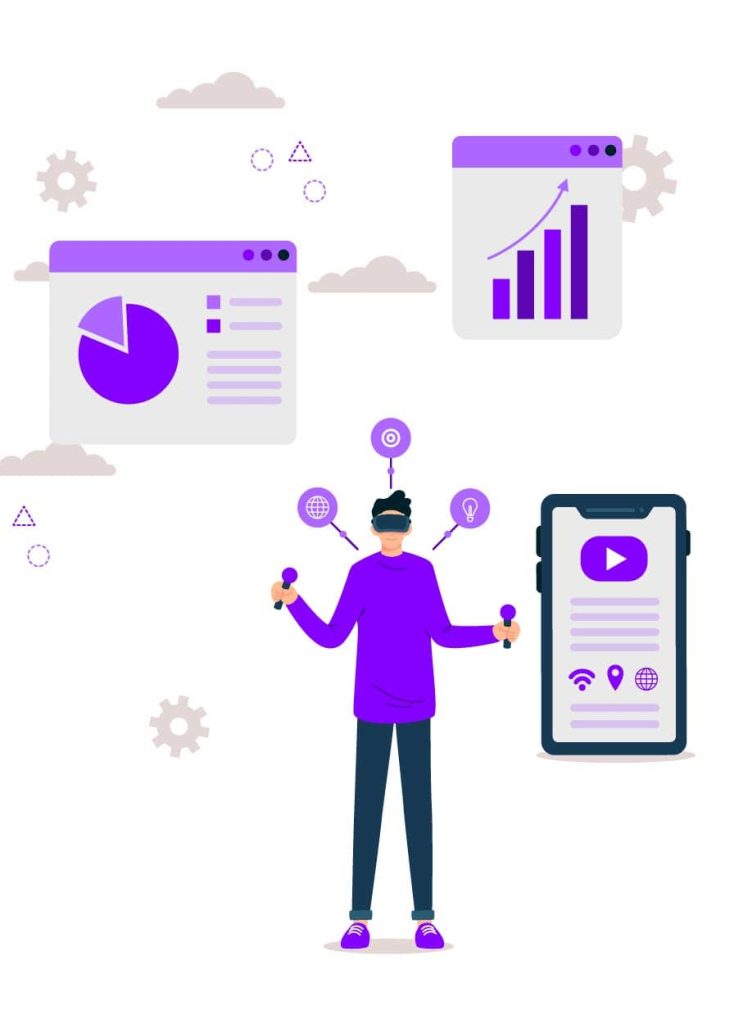
Contemporary digital marketing depends on tracking. Absent conversion tracking, it is tough to know what keywords, ads, and landing pages deliver real results. Tracking should monitor calls, form submissions, and every other meaningful action tied to lead generation. When that data is precise, campaign decisions become far more strategic.
Analytics reveal how users behave after they click. You can identify pages with stronger engagement signals, track where drop-offs happen, and see whether certain traffic sources generate more valuable leads. That insight helps identify problems in message match, page structure, or CTA placement. It also supports more effective budget allocation by showing which campaigns warrant more investment.
A/B testing is one of the most effective ways to improve conversion rate optimization. You can test headlines, button text, images, form length, and offer language to see what resonates with Syracuse audiences. A small change in wording or layout can shift behavior dramatically, especially when paired with reliable performance data. Testing should be ongoing because user behavior, seasonality, and competition all evolve over time.
Digital marketers should also study performance data in context. A high click-through rate does not always mean a campaign is healthy if the leads are unqualified. Likewise, a lower CTR might still be worthwhile if it attracts better prospects and produces more revenue. The real goal is not traffic by itself; it is better lead quality and efficient conversion.
Where Artificial Intelligence Professionals Contribute Value to the Optimization Process
Experienced ai experts can enable businesses identify trends in campaign data more quickly than manual review alone. With automation, teams can watch bid changes, detect low-performing assets, and surface opportunities for quicker response. This becomes especially valuable when managing multiple service lines or multiple landing pages across Central New York.
Predictive analysis can help forecast which audiences, devices, times of day, or locations are most likely to convert. It becomes easier to guide budget toward the most promising opportunities before wasted spend accumulates. In paid search, predictive insights can support smarter adjustments to audience targeting, remarketing, and campaign structure.
Ad optimization also gains from AI-assisted workflows. AI can help generate ad variations, evaluate engagement signals, and pinpoint which combinations of headlines and descriptions improve relevance. Used correctly, it does not replace strategy; it strengthens it. Human oversight is still required to maintain brand voice, ensure accuracy, and keep campaigns aligned with business goals.
AI can also support landing page refinement by spotting behavior trends and recommending where users hesitate. For example, if many visitors scroll but do not submit a form, the issue may be the CTA placement, copy density, or trust signals. By combining automation with human judgment, businesses can enhance both campaign performance and the customer journey.
Local Credibility and Syracuse-centered Guidelines
For businesses in Syracuse, NY, local context can make or break a campaign. Customers searching for services in Central New York often evaluate several providers fast, especially in crowded categories like home repair, legal services, healthcare, and community-based professional support. That makes it important to build landing pages around a well-defined local service area and a compelling regional value proposition.
Location targeting should reflect actual service zones. If a company serves DeWitt, Cicero, and Liverpool, those locations should appear naturally in ad groups, landing page copy, and service-area details. This supports stronger relevance for nearby searchers and supports better ad efficiency. It further lowers wasted spend from users who are outside the area and less likely to convert.
Regional confidence signals should be straightforward to verify. A Syracuse phone number, a local address, and locally relevant testimonials help reassure prospects that the business is truly nearby and available. If possible, use photos of the team, office, or local work rather than generic stock images. These details build credibility and enhance user experience, especially for first-time visitors who may be evaluating several options.
Local Syracuse companies should as well account for seasonal fluctuations. Cold-weather storms, freezing temperatures, and student activity can all impact search volume and speed of demand. A heating company may see a surge during frigid conditions, while student move-in periods may create demand for relocation services, janitorial services, or apartment support. These patterns should shape bidding, campaign scheduling, and landing page copy.
In a competitive local market, the best campaigns are not just visible. They are pertinent, rapid, credible, and centered on what Syracuse customers actually need at the moment they look.
Common Questions About Google Ads and Landing Page Optimization
How does Google Ads management improve landing page performance?
Good Google Ads management improves landing page performance by establishing tighter match between keywords, ad copy, and page messaging. If the promise in the ad reflects the page content, visitors are more likely to stay engaged, trust the offer, and take the desired action. Such alignment raises conversion rate, promotes better quality score, and can lower cost per click over time.
What makes a landing page convert more effectively for Syracuse businesses?
Effective landing pages convert better when they reflect local search intent, open quickly, and make the next step clear. For Syracuse businesses, that means including local references, a specific call to action, responsive formatting, and trust signals like a local phone number or address. Good headline testing and form optimization can also boost performance.
How can web design and SEO services support Google Ads results?
Web design improves the way visitors view the page, while SEO services help build keyword alignment and content quality. Together, they create stronger landing page relevance, better user experience, and a smoother path to conversion. They also reinforce organic search visibility, which can improve overall digital marketing performance.
What part do ai experts play in ad optimization and testing?
ai experts can use automation and predictive analysis https://syracuse-ny-bk021.image-perth.org/lead-gen-digital-marketing-strategy-for-business-to-business-companies-in-syracuse-ny to spot patterns in campaign data, test more variations, and speed up ad optimization speed. They help teams analyze performance data, refine audience targeting, and support smarter decisions around bidding and messaging. AI works best when paired with human strategy and strong conversion goals.
What can local businesses in Syracuse lower cost per lead with PPC?
Local businesses in Syracuse can lower cost per lead by improving keyword targeting, adding negative keywords, tightening geo-targeting, and building stronger landing page relevance. They should also use conversion tracking, A/B testing, and analytics to identify which ads and pages produce the highest-quality leads. Better relevance often improves click-through rate and quality score, which can reduce waste in PPC campaigns and improve lead generation efficiency.
Sunstone Digital Tech
201 E Jefferson St, Syracuse, NY 13202
(315) 758-3349
https://maps.app.goo.gl/LNcnKZaUXSqxHPoT8
https://sunstonedigitaltech.com/
43.0471862, -76.1504376